

That is what turns regulation into a life skill.
If you are coming from our recent article on sensory regulation outside the classroom, this post is the natural follow-up. It focuses on how students can learn to notice body signals and self-advocate for breaks during recess, transitions, and home routines.
Related article: https://thegatewayschool.com/sensory-regulation-outside-the-classroom-recess-transitions-and-home-routines/
Below are five practical ways families can reinforce self-awareness and self-advocacy at home, in a way that supports the same whole-child outcomes we focus on at The Gateway School.
1) Teach body signals in simple, concrete language
Before a student can ask for a break, they need a way to recognize the early signs that their system is getting overwhelmed. Keep it specific and observable. Pick two to three body signals to start.
Common early signals:
- Tight shoulders or clenched jaw
- Faster breathing
- Pacing or increased movement
- Covering ears, squinting, or rubbing eyes
- Voice getting louder or more urgent
Use neutral language. You are not labeling behavior as bad. You are noticing what the body is communicating. If your child benefits from visuals, create a small body signals chart with pictures or simple words and keep it in a consistent spot.
2) Build a short break script your child can actually use
Self-advocacy works best when the words are easy, practiced, and accepted by adults right away. Start with one script and repeat it every day for a week. Keep it short.
Examples:
- I need a break
- My body needs a reset
- Can I take a movement break
- Quiet please
- Help me
At Gateway, we support self-advocacy and communication using tools that match each student's needs, including AAC systems. Many students benefit from communication supports such as Proloquo2Go and PECS, which provide a reliable way to express needs and advocate for themselves.
Technology and communication supports: https://thegatewayschool.com/our-programs/technology-programs/
If your child uses AAC, add the break request to their device or communication board and practice it during calm moments.
3) Practice asking before the hard moment happens
Most families only introduce break language when a student is already dysregulated. Instead, rehearse the script when things are calm. Make it feel normal and successful.
Try a simple practice routine:
- Set a timer for two minutes of a mildly challenging activity
- Prompt the break script before frustration rises
- Give the break immediately
- Return to the activity for a short, doable finish
The goal is for the student to learn: asking questions, and breaks help me stay in control.
4) Make breaks predictable and purposeful
A break should not feel like avoidance. It should feel like a strategy. A good break has three parts.
A good break includes:
- A clear start
- A short, calming activity
- A clear return
Break ideas that support regulation:
- Deep pressure using a pillow or weighted item
- Wall push-ups or chair push-ups
- Slow breathing with a visual prompt
- A short sensory bin or fidget routine
- A quiet corner with soft lighting
Gateway's sensory spaces are designed to help students pause, reset, and return to learning with more readiness and confidence.
These articles are helpful companion reads.
Inside Gateway's Sensory Room: https://thegatewayschool.com/inside-gateways-sensory-room-a-calming-space-designed-for-growth/
From the Sensory Room to the Classroom:
https://thegatewayschool.com/from-the-sensory-room-to-the-classroom-preparing-students-for-a-day-of-learning/
5) Link self-advocacy to flexible thinking and problem-solving
Asking for a break is not the end goal. The end goal is to make a plan, then return to the situation with support. That is where independence grows.
After the break, use one simple question:
- What is your next step
You can also offer two choices:
- Do you want to try again the same way, or a different way again?
Flexible thinking is a learnable skill that supports regulation by reducing the panic that can come from unexpected changes. This article connects well to this topic.
Flexible thinking article: https://thegatewayschool.com/building-flexible-thinking-skills-guiding-students-toward-adaptability-and-confidence/
A Final Note for Families
Progress often looks like this:
- First, the student regulates with adult help.
- Then, the student learns the words or tools to name what they need.
- Then, the student starts asking earlier.
- Finally, the student begins returning to the task with more confidence.
That is regulation becoming independent.
If you want additional support resources, Gateway's Parent Resources and Support page is a strong place to start.
If you are looking for a deeper dive into communication and self-advocacy as whole-child outcomes, this companion article also fits perfectly with today's topic.
Thank you for visiting The Gateway School
Since 1980, RKS Associates has been a leader in providing the needs of special education students and helping children grow to their fullest potential. Each of our schools seeks to empower each student with skills for life, work, and recreation; we believe that every individual possesses the dignity and potential to contribute to a better world.
As part of the RKS Associates Network of schools in New Jersey, the goal at the Gateway School is to assist all students in becoming as independent as possible and help them get ready for the future. Located in Carteret, NJ, we serve individuals throughout Central and Northern New Jersey. Contact us at our main office at 732.541.4400 with any questions, but to get started, please contact your District's Case Manager.
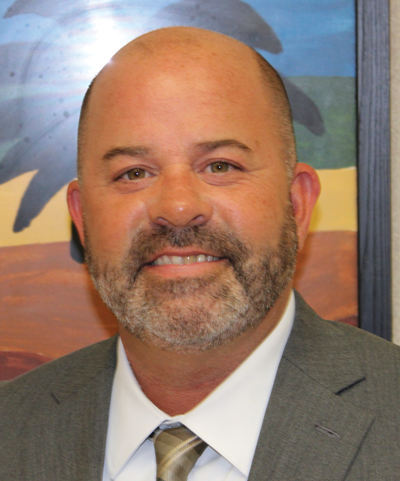
Kevin Jones Principal-The Gateway School of Carteret, NJ